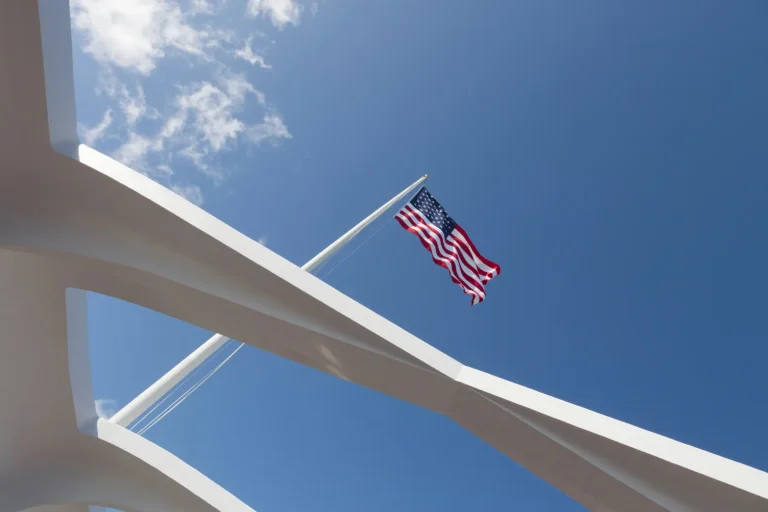
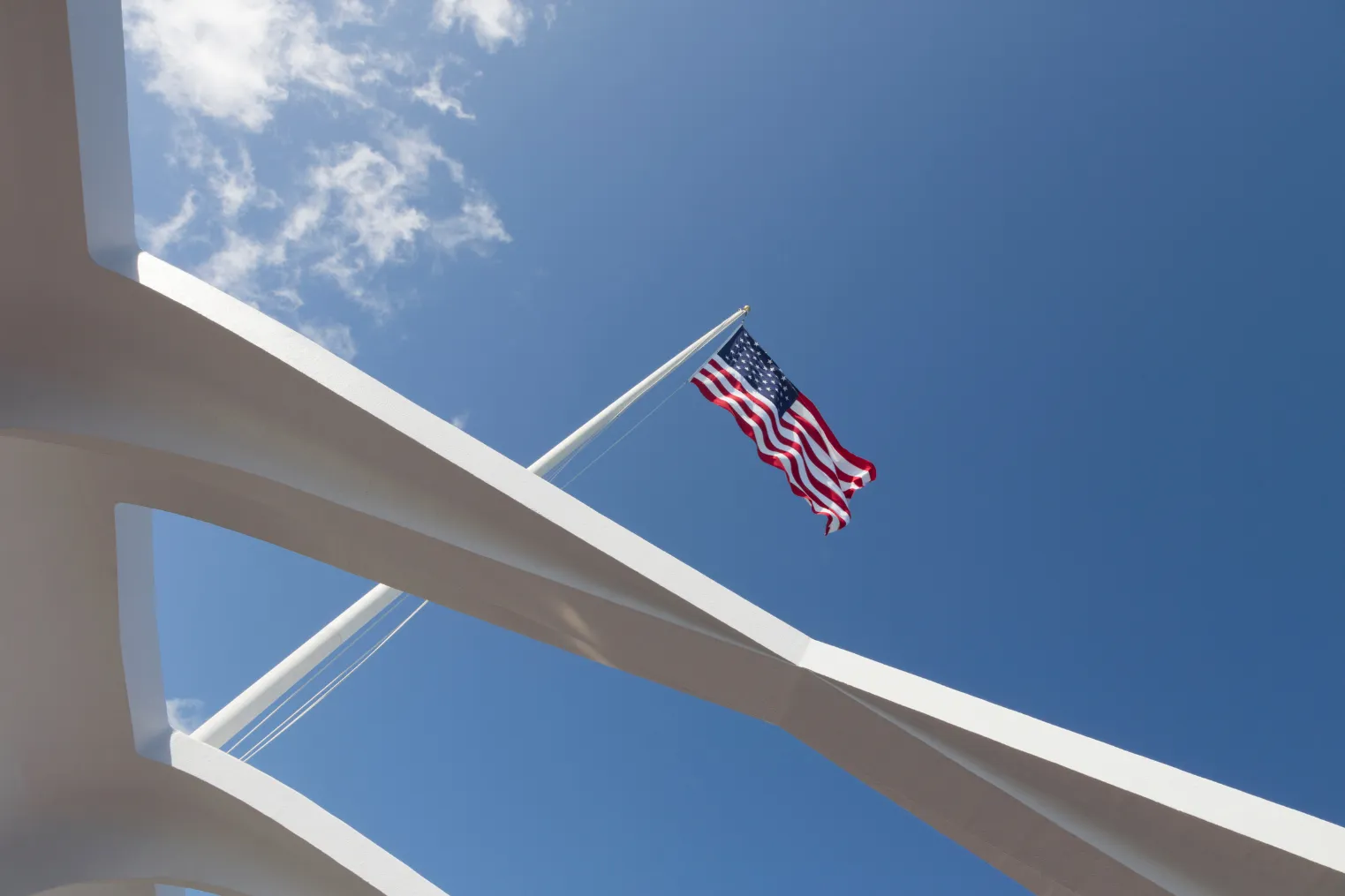
Pearl Harbor can feel like a camera lens turning into a time machine. You start at the USS Arizona Memorial and look down at the dark shape of the wreck, then catch that thin oil sheen drifting like a quiet signature. You swing to Remembrance Circle and frame white railings with the Missouri on the horizon. Bring a polarizer, keep your bag light, and mind the hush of footsteps. Next, you’ll want the angle that surprises you most…
Key Takeaways
- Ride the earliest USS Arizona Memorial shuttle for calm water, low sun, and the best chance to capture the oil sheen.
- Shoot wide from the launch boat and memorial walkway to frame the white roof with Pearl Harbor and Battleship Missouri behind.
- Use a 2–3x zoom or telephoto from open side windows to isolate the Arizona’s turret and cracked hull without a tripod.
- Photograph the Remembrance Circle facing southwest to align the crescent walls, plaques, Arizona Memorial, and Missouri on the horizon.
- Visit the USS Oklahoma Memorial on Ford Island to capture striking rows of white marble pillars with Missouri silhouetted in the background.
Pearl Harbor Photography Rules + What to Bring
Although Pearl Harbor feels like an open-air photo playground with sun-glittered water and crisp white memorial lines, you’ll want to pack and shoot with the rules in mind. Tripods, monopods, and big camera bags stay out of the USS Arizona Memorial and many Pearl sites, so bring a small body and one versatile lens. Leave extra bags in your car or offsite storage. Drones are a no, flash gets frowned on inside, and you’ll keep voices low and poses simple because families come to remember. Be sure to review the official list of prohibited items at Pearl Harbor so nothing in your photo kit gets turned away at security. Reserve your shuttle boat ticket early since it sells out fast, and standby can be a coin flip. If you’re adding Bowfin, Aviation Museum, the Tower, or Missouri, book each separately. Pack a polarizer and a reflector for glare.
Best Time for Pearl Harbor Photos (Light + Wind)
If you time Pearl Harbor like you’d time a tide pool, the whole place rewards you with calmer water, cleaner light, and fewer photo headaches. Grab the first shuttle boat slots for the USS Arizona, when winds often stay under 5 to 10 mph and the harbor turns glassy. You’ll cut glare and maybe catch that faint oil sheen and crisp reflections. Early visitors also get some of the least crowded hours, when smaller groups mean fewer people in your frames and more flexibility to move around for the best angles.
- A still surface that mirrors palms
- Soft engine hum on the early ride
- Silver oil shimmer near the hull
- Blue noon water showing the outline below
- Golden-hour shadows warming steel and stone
Late morning can reveal the sunken shape best, but breezes can chop it up. Winter brings softer skies and bigger crowds. Summer stays sunnier and calmer, so pick your mood.
Shoot the USS Arizona Memorial: Best Angles
From the launch boat or the memorial’s circle walkway, you’ll want a wide shot that frames the white wave roof with the harbor and the distant Battleship Missouri for instant scale. Then you can switch to a mid-range zoom and pick out the gun turret breaking the waterline, a crisp subject that almost composes itself while the boat hums along. If you’re here right after sunrise and the water’s calm, you can aim straight down and catch the wreck’s outline and that quiet oil sheen that locals call the “tears.” If you’re timing your visit to match good light, it helps to plan ahead using USS Arizona Memorial reservations so you’re on site when the conditions are best for shooting.
Turret And Wreck Views
When the shuttle boat glides up to the USS Arizona Memorial, you can tell right away you’re not just photographing a bright white monument in blue water. You’re hovering over USS Arizona itself, and a wide lens lets you catch the wave roof plus the dark hull shape below. From the port side, hunt the forward turret peeking above the surface and use it as a gritty foreground, with the memorial or Battleship Missouri set behind it. If you don’t already have reserved tickets, arriving early and using the USS Arizona Memorial standby line can be your best shot at riding the shuttle boat out for these views.
- White ribs of the roof against cobalt sky
- Rusted steel edges under rippled glassy water
- A turret ring breaking the surface like a knuckle
- Names on cool marble framed through side windows
- Quiet boat motors, like a low whisper near USS Bowfin Submarine
Keep your shots steady.
Still comparing Pearl Harbor?
Ask for tour ideas, hotel suggestions, or a simple trip plan that combines both.
Trip Helper
Oil Sheen In Morning
Often, the first USS Arizona shuttle of the morning delivers the most haunting detail of all: a thin oil sheen that curls across the calm water like black tears. Booking free but limited USS Arizona Memorial tickets in advance helps ensure you can catch this earliest, quietest boat. Book that first boat and you’ll catch Pearl Harbor at its quietest, when winds stay under about 8 to 10 mph and the surface turns glassy.
Stand near the bow-facing edge of the launch boat and fit a polarizing filter or a phone clip. You’ll cut glare and pull up tiny droplets and the hull’s shadowy lines below. Frame the memorial’s bright roof against the dark patches for clean contrast in soft early light. If staff allows walkway access later, point your camera down through the open side windows and watch the sheen sparkle today.
Wide Shots From Circle
You’ll almost always get your cleanest, widest view by stepping onto Remembrance Circle and facing southwest. From here, frame the USS Arizona Memorial with the harbor as your middle layer and the Battleship Missouri rising in the distance. Catch the first shuttle if you can; morning air stays calmer, and you might even see the Arizona’s oil sheen shimmer like a thin rainbow. Use a polarizer or phone HDR to cut glare and keep the memorial’s white bright. If you’re timing your shots around the official USS Arizona Memorial program, plan for roughly 75 minutes total from theater briefing to boat ride and return.
- White roofline curving like a wave
- Dark outline of the sunken hull under glassy water
- Missouri’s gray superstructure peeking over the span
- Names on the marble wall anchoring your foreground
- Soft gold light and quiet boat engines all around
For a lower angle, shoot from deck.
Photograph the USS Arizona Wreck + Oil “Tears
Book the earliest USS Arizona shuttle so you’re on the first boat when the water’s calm and the oil sheen has its best chance to show. From the memorial’s open side windows or the launch boat, you can shoot a slightly overhead angle to trace the dark hull outline and catch the slow “tears,” and you’ll want a polarizer to tame the glare. Keep your frame wide and include the white memorial lines plus that gun turret tip breaking the surface, because it gives you a crisp focal point in a place that’s otherwise all quiet ripples and reflection. Be sure to confirm whether you need tickets for the USS Arizona Memorial in advance so you don’t miss your ideal photo time slot.
Best Viewing Angles
While the harbor still feels glassy in the early morning, you can line up the best angles for photographing the USS Arizona’s resting place and the faint oil “tears” that shimmer on the surface.
- First shuttle boat, quiet water, steady hands
- Wide view over the memorial edge to the turret
- Stand opposite the sun, usually facing southwest
- Zoom through open windows for hull lines below
- Polarizer or phone setting to tame reflections
Remember that this is an active gravesite, so keep your tone and behavior calm, and let your images reflect respectful photography rather than a casual tourist stop.
Keep your elbows on the rail and breathe when the boat wake fades. Let the memorial’s white curves frame the dark rectangle beneath you. You’ll hear a low hum of engines and the tick of flags in the breeze. Afterward, swing by the Pearl Harbor Aviation Museum with salt on your lens.
Capturing Oil “Tears
Often the oil “tears of the Arizona” show best on the first shuttle boat, when the harbor stays calm and the water holds a glassy sheen. Book that departure and you’ll gain the odds of seeing droplets rise and spread into an iridescent film. The Pearl Harbor National Memorial visitor center offers updated alerts and a calendar of events so you can time your visit and photo session around programs and conditions. On the memorial platform, look straight down and scan with phone HDR the sunward side of the USS Arizona wreck. You can pick out the gun turret and the cracked hull from the attack on Pearl Harbor. Use a telephoto or your phone’s 2 to 3x zoom to frame the turret with glints. Keep your distance and skip the tripod. When a sheen appears, fire short bursts and bracket exposures with a slight underexpose. You’ll catch movement before it fades.
Lighting And Reflection Control
Those quick bursts of oil sheen look even better when you tame the glare that skates across the harbor. Book the earliest shuttle to the USS Arizona so winds stay calm and the sun stays low. Sit on the launch boat’s left side and keep the morning sun behind you. Add a polarizer or your phone’s setting to peel away reflections. Check current Pearl Harbor National Memorial hours before booking so your first shuttle aligns with early light and calm conditions.
- Silver ripples quiet as the boat idles
- Dark hull lines ghosting under green water
- Rainbow tears beading then drifting apart
- White memorial windows offering a higher angle
- Distant USS Missouri steel catching clean light
Shoot at f/5.6 to f/8 with low ISO from the rail or window. If noon glare wins, tilt toward grazing highlights and try high-contrast black-and-white later for extra punch.
Take Powerful USS Missouri Photos From the Pier
Step onto the pier and line yourself up straight with the Battleship Missouri so you can shoot her full bow-to-stern sweep, all 887 feet of steel attitude. Stay centered and let the superstructure and 16-inch turrets own the foreground. Put the Surrender Deck and its roped-off plaque in the midground. After your photos, take time to step aboard and experience the 35-minute guided tour that’s included with general admission for a deeper sense of the ship’s World War II story.
| Tool or angle | What you’ll get |
|---|---|
| Wide-angle | Full ship plus pier and harbor |
| 70–200mm | Isolated guns, fittings, plaque |
| Early morning | Cooler air, fewer harsh highlights |
| Late afternoon | Golden light that sculpts the hull |
Come at golden hour and watch warm light glide over. Face southwest and tuck the USS Arizona Memorial or Remembrance Circle behind her for a neat visual link. You’ll hear flag lines clink and water slap the pilings while you shoot.
Photograph the Surrender Deck Spot Respectfully
From the pier you can frame the Mighty Mo like a movie star, but up on deck the mood shifts to quiet focus. The USS Missouri’s Surrender Deck is roped off and marked by a plaque showing where the surrender desk stood, so treat it like a chapel. Speak low, skip silly poses, and don’t park yourself in front of the plaque. As you move along the ship’s tour routes, notice how each vantage point reveals different lines of the hull and superstructure that can add depth to your surrender-deck shots.
- Sun-warmed teak under your shoes
- Rope line casting shadows
- Bronze plaque catching glare
- 16-inch turrets looming in the background
- Broad deck lines pulling your eye forward
Step back for full-ship context, then shoot wide or hold your phone vertical at deck level. Keep ISO low and exposure balanced so the words stay readable. Plan separate admission and check times to dodge crowds.
Compose Remembrance Circle Shots (Names + Skyline)
When you want one frame that tells the whole Pearl Harbor story, head into the Remembrance Circle and face southwest. Let the crescent concrete walls lead your eye to the blue plaques, then line up the USS Arizona Memorial and USS Missouri on the horizon. Shoot wide in landscape, or use a wide lens, and place the wall and skyline on rule-of-thirds points. Come early for calmer water and softer light so glare stays low and the etched names stay readable. Move in close to mid distance, then zoom a bit or plan to crop later. You might even catch the Arizona’s wreck outline or a faint oil sheen behind the skyline. Skip peak ceremony days and you’ll hear wind, water, and shutter clicks. While you’re framing your shot, remember that this is an active gravesite, so keep voices low and follow the memorial’s guidelines for respectful conduct while taking photos.
Photograph the USS Oklahoma Memorial Pillars (Ford Island)
After you’ve lined up big history in the Remembrance Circle, head over to Ford Island for a more intimate kind of scale at the USS Oklahoma Memorial. You’ll reach it on a guided tour since this is an active base. The 429 white marble pillars glow in sun and shade, each carved with one name. Step back and let the rows repeat. Then move in for a single inscription and the cool stone under fingers. From the pier, angle wide so the Battleship Missouri sits in soft silhouette behind the field of markers. Read the black granite context walls too; nearly 400 were unidentifiable, and the hush gets louder. To reach Ford Island, most visitors board the complimentary shuttle service inside the Pearl Harbor Visitor Center, which runs between 8:00am and 5:00pm.
- White marble ranks
- Harbor air clinks
- One name close
- Missouri silhouette behind
- Granite wall notes
USS Bowfin Dockside Photography Ideas (Wide + Detail)
Stepping onto the museum pier beside USS Bowfin, you can feel the place shift from memorial quiet to working-harbor grit. Shoot a wide dockside frame mid-morning so sun pops the conning tower and water sparkles. Use a wide lens to grab the bow, dock cleats, and museum sign. For more context on the sub’s history and layout, swing through the adjacent USS Bowfin Submarine Museum before or after your pier shots.
| Shot | Quick tip |
|---|---|
| Wide pier view | Include cleats + signage |
| Low bow planes | ISO 100–200, f/5.6 |
| Tower plaque | 35–50mm, blur background |
| Panorama story | Add Arizona or Missouri |
Flip to black-and-white for tight rivets and periscopes. For a nod to USS Oklahoma (BB-37., keep your horizon level and let the Harbor reflections stay calm. Listen for rigging clinks and time your shutter between passing tour groups today.
Frequently Asked Questions
What Camera Settings Work Best for Capturing Moving Launch Boats?
Use 1/500s–1/1000s, AF‑C with one point on the boat, and burst mode. Set f/5.6–f/8, raise ISO 200–1600 as needed, try a panning technique, and do shutter experimentation; brace your elbows, shoot 24–70 or 70–200mm tight.
Are Tripods Allowed on the Memorial and Museum Grounds?
No, you can’t set up a tripod like you’re directing a blockbuster among solemn history. Tripod policies ban them on the USS Arizona Memorial; memorial restrictions discourage them elsewhere. You’ll shoot handheld; drones are forbidden.
How Long Does the Full Pearl Harbor Photo Route Typically Take?
You’ll spend 1–1.5 hours on the free memorial grounds; add 60–90 minutes for the USS Arizona shuttle, 45–60 minutes for Bowfin, and 3.5–5 hours for Ford Island, typical duration 6–8 hours with route pacing overall today.
Is a Telephoto Lens Necessary for Detailed Shots Across the Harbor?
Not strictly, but you’ll want one for crisp details across the harbor. A 70–200mm isolates plaques and turrets; 200–300mm helps oil “tears.” If you can’t, use telephoto alternatives, cropping, and smart composition techniques instead, carefully.
Are There Guided Photo Tours Specifically for Pearl Harbor Photographers?
Yes, you’ll find guided workshops and photography meetups, because apparently history needs a chaperone. You can book Ford Island photo tours, private operators bundling Arizona tickets, and ranger programs; reserve early, follow no-tripod rules.
Conclusion
You’ll leave Pearl Harbor with a memory card that feels heavier than a battleship. You’ve chased soft sunrise light on the Arizona Memorial, watched the wreck shimmer under the surface, and caught the oil tears sliding like slow ink. You’ve lined up Remembrance Circle names with the skyline, then swung to the Missouri pier for full-ship sweeps. You’ve kept gear light, pockets quiet, and footsteps respectful. Even the wind seems to whisper, “Hold steady.”